Project
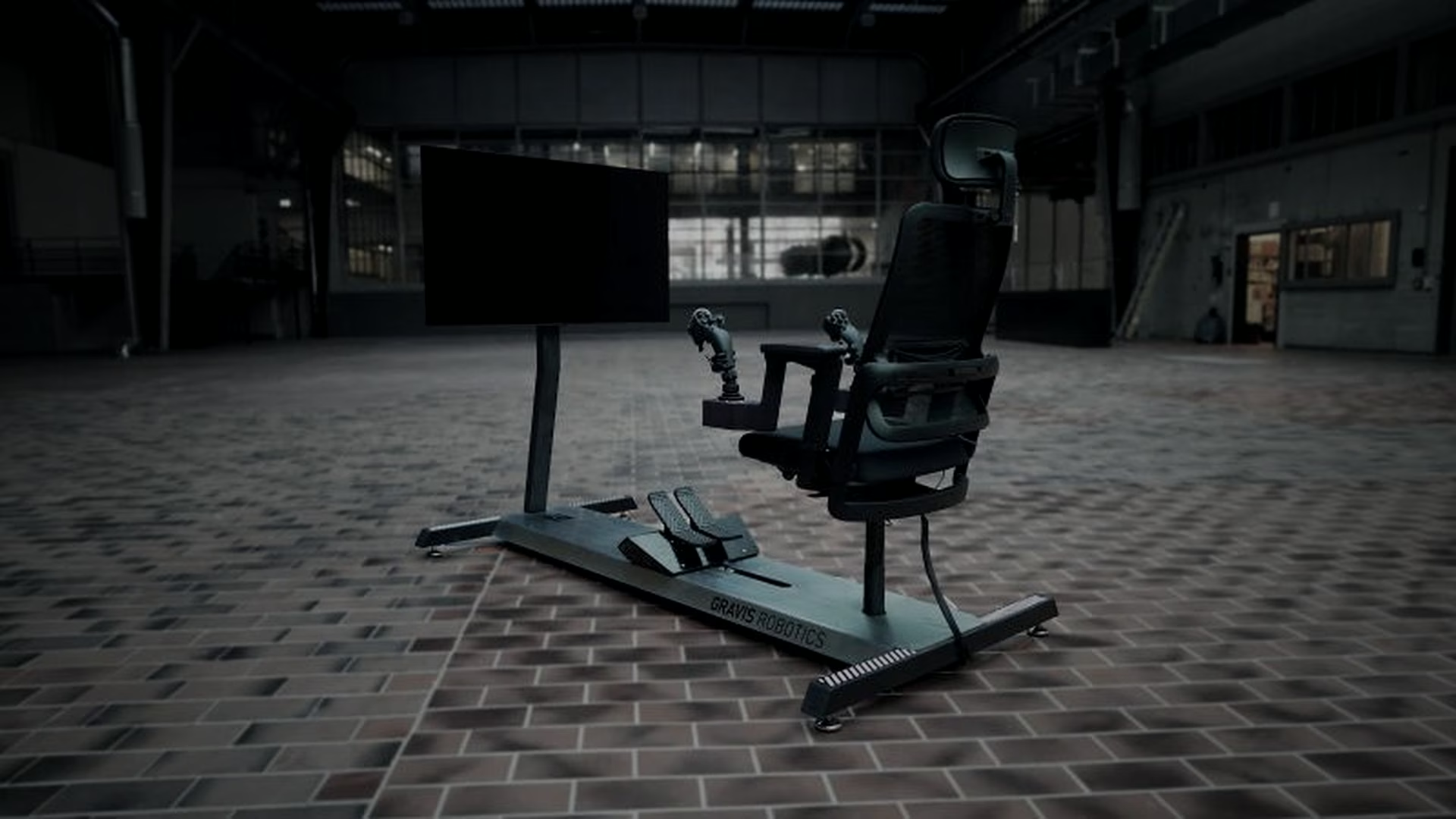
Teleoperation Stand
Gravis Robotics ($23M funded) retrofits excavators and loaders with AI-driven autonomy for clients like Holcim and Boskalis. I designed the teleoperation workstation and its rugged enclosure: the operator-side hardware for supervising autonomous earthmoving from hundreds of kilometres away.
Teleoperation Workstation
Integrated joysticks, multi-display arrays, and communication hardware into a compact, ergonomic layout built for extended operator shifts. The workstation complements Gravis's on-machine 'Rack' and 'Slate' touchscreen interface, supporting transitions between manual, assisted, and fully autonomous operating modes on active construction sites.
Rugged Enclosure
Engineered the protective enclosure for deployment on active construction sites alongside clients such as Holcim and Boskalis. Focused on IP-rated sealing strategy, field-serviceable access panels, structured cable routing, and transport resilience for dusty, vibration-heavy environments.
$23M
Series Funding
IP-rated
Sealed Enclosure
Holcim, Boskalis
Customer Deployments
Challenges
- Operators sit at this workstation for full shifts. Ergonomics, display visibility, and control layout had to be right without sacrificing portability.
- The enclosure deploys on active construction sites alongside heavy machinery. Dust, vibration, temperature swings, and rough transport are part of daily operation.
Outcomes
- Delivered a production-intent workstation and enclosure, integrated into Gravis's autonomous earthmoving platform.
- Enclosure built for field serviceability: structured cable routing, IP-rated sealing, and tool-free access panels for on-site maintenance.